Roof Insurance Claims in Alma, AR
A roof insurance claim is decided on evidence and on the wording of your own policy, in that order.
Go into your claim with a dated, photographed account of what the storm did to your Alma roof.
What a roof claim usually turns on
Two things decide most roof claims and neither is how bad the roof looks. What follows is what to check on your own declarations page before you file.
A covered event
Damage has to trace to something the policy covers, typically wind or hail, and to a date. Wear is not an event, which is why establishing which storm did it matters as much as the damage itself.
Replacement cost or actual cash value
Replacement cost pays to put the roof back. Actual cash value pays what the old roof was worth after depreciation, which on a twenty-year covering is a very different check.
Your deductible
Often separate for wind and hail, and often a percentage of the insured value rather than a flat figure. It is the number that decides whether filing is worth it at all.
Evidence
Dated photographs and a written record. What an adjuster concludes is theirs to decide; what they receive is something you can control.
Neither one is a roofer's call. Both are settled by the policy wording and by what the storm record supports.
How actual cash value and replacement cost differ
The replacement-cost line is the single most consequential one in a roof policy and the one most people discover afterwards.
Replacement cost coverage pays what it takes to put an equivalent roof back on. Actual cash value pays that figure minus depreciation for the age of the covering, so an older roof settles for materially less even when the damage is identical.
The useful version of help here is a roofer alongside you for the technical parts, the documentation and the adjuster visit, while the claim itself stays yours to file, settle or drop.
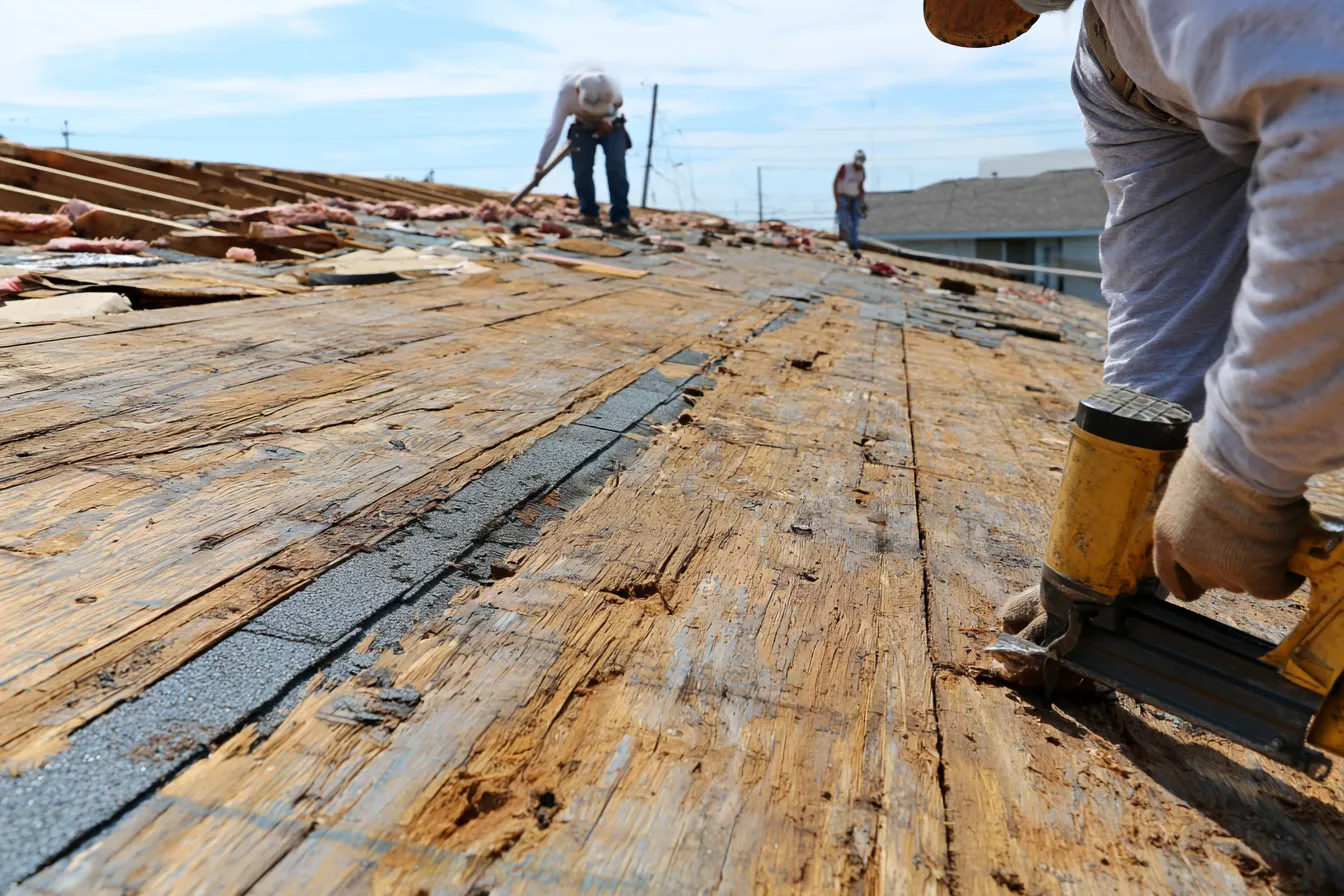
The roof photographed and dated
What the roofer photographs is dated against the loss the county record supports, so the file carries evidence a stranger can check.
Test squares on each face
Hits are counted in a marked area on each face, which is the measurement an adjuster is trained to look for.
The whole envelope, not just the covering
Gutters, vents, flashing and soft metals are checked, because damage the covering survived often shows there first.
A scope written in claim terms
What is found is written up line by line so it can be compared against what the carrier has approved.
Present at the adjuster visit
A roofer works with your adjuster through the claim, so nothing on the roof goes unexamined.
A supplement when the scope falls short
If what the carrier approves leaves out work the roof needs, the shortfall is written up and sent back with the evidence rather than quietly absorbed.
An Alma roof claim, start to finish
The order matters because documentation gathered before a decision is worth more than an argument made after one. Nothing here asks you to commit to work before the findings are settled.
Before anything else
Dated photographs of the damage, inside and out, plus anything else on the property the same storm marked.
Your declarations page
Replacement cost or actual cash value, the wind and hail deductible, and any notice period. Ten minutes here changes what you do next.
You open the claim
A roofer can be on the roof when the adjuster comes out, so nothing gets left out of the write-up.
What the adjuster receives, and what follows
A written record of what was found and where. What they conclude from it is their decision, and no roofer can promise otherwise.
Claim questions Alma homeowners ask most
Depreciation, denials, and where a roofer's part of a claim ends and the carrier's begins.
Document the damage before you file
Send what you have noticed and roughly when the weather came through. The damage gets documented and dated.