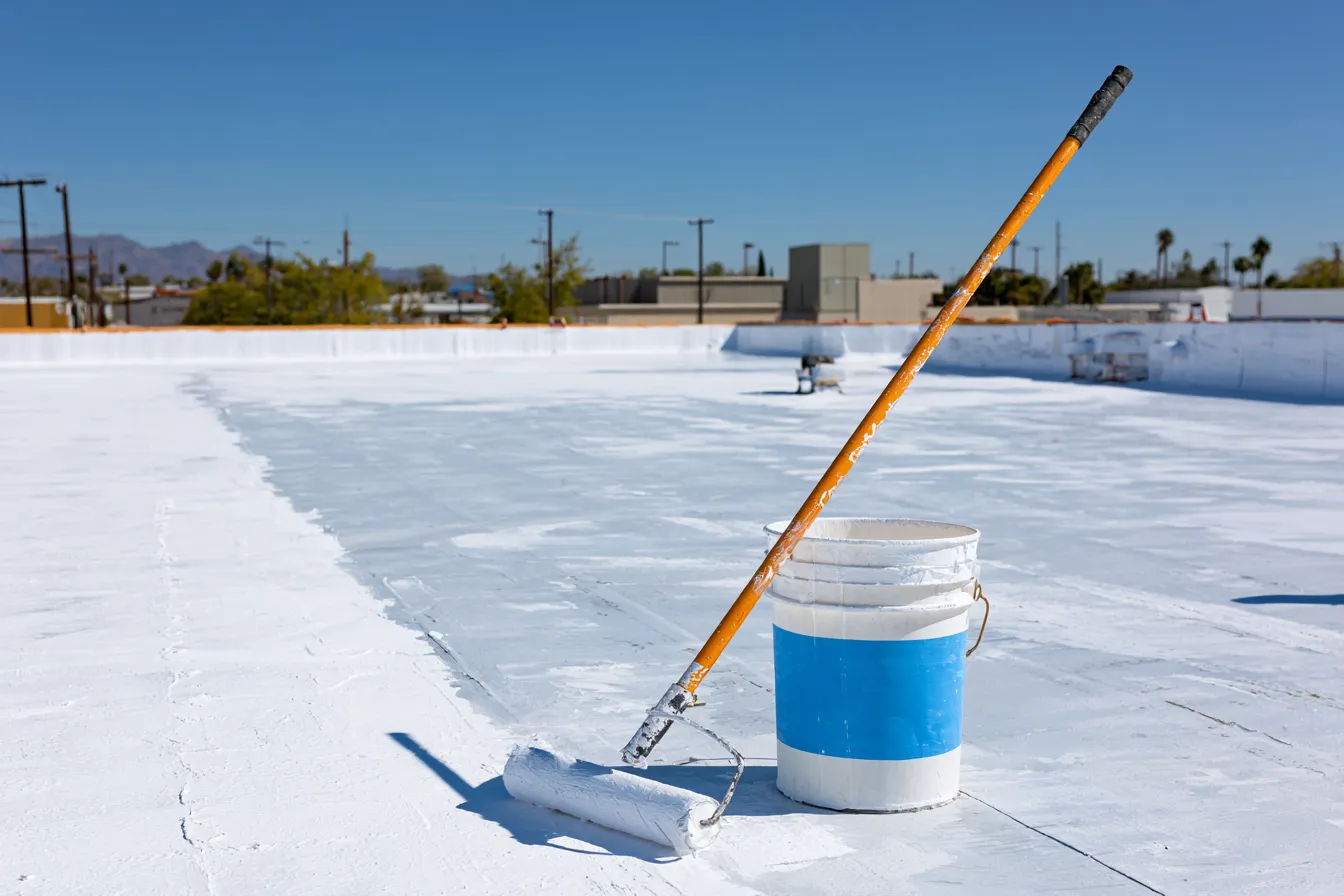
Commercial Roofing in Alma, AR
Commercial roofing has two problems: the roof, and keeping the building trading while it is dealt with.
On a commercial roof the sequencing is usually the harder half: tenants, access and trading hours all have a say.
Commercial roofing in Alma and Crawford County
Retail units, offices, light industrial buildings and the mixed-use blocks along the older part of town: those are the roofs this page covers. They are specified, priced and phased on different terms than a house roof is, because something is always operating underneath them.
If what you have is the flat section over a house extension or a porch, flat roof repair is the better page for it.
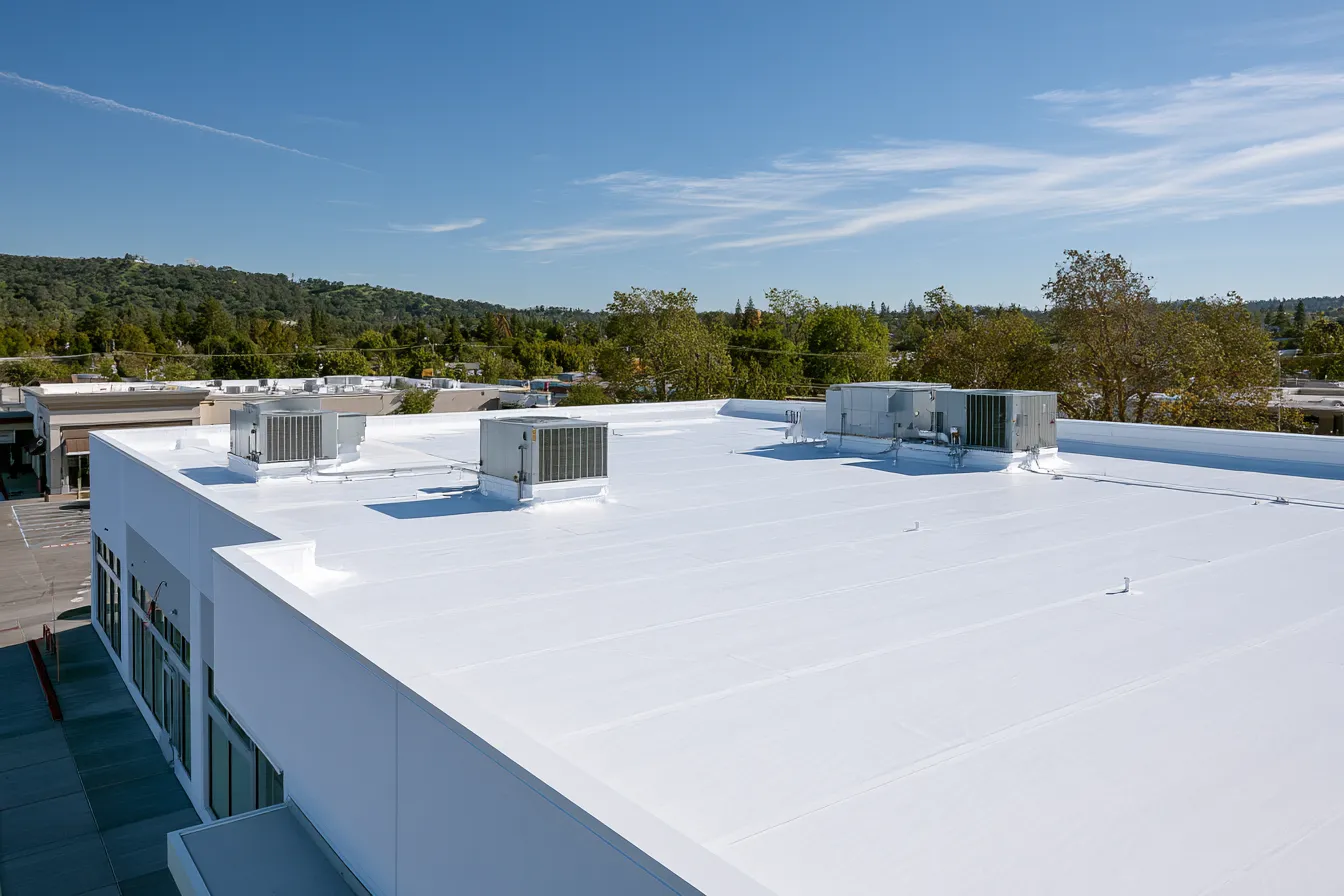
Commercial roofs are mostly membrane systems over a large, shallow area, which changes the failure pattern. Faults concentrate at seams, upstands, drains and the units that punch through the surface, and a single blocked outlet can affect far more floor area than the same fault on a house.
The other difference is what a failure costs. A leak over a warehouse aisle or a tenanted unit puts inventory, fit-out and goodwill at risk alongside the building fabric, which is why documentation and sequencing matter more here than the covering choice does.
A condition survey of the whole surface
Seams, upstands, drains and every unit punching through the membrane, because that is where flat roofs fail.
What sits underneath mapped
Inventory, tenants, plant and server rooms are noted before any work is planned, because they decide the phasing.
Drainage and ponding assessed
A blocked or undersized outlet affects far more floor area on a large shallow roof than it would on a house.
System options priced against the building
TPO, EPDM and modified bitumen are compared on what the building does, not on what is easiest to install.
Phasing that keeps the building trading
The work is sequenced around how the building runs, and that sequence is agreed before anything starts.
Sequencing work around an open Alma building
Nothing about a commercial roof is done in one uninterrupted run, because the building underneath has to keep working. The order below is what that constraint produces.
The roof and what is under it
The condition survey covers the membrane and the details, and separately what sits beneath each area: inventory, tenants, plant, server rooms.
Areas, not the whole roof
Work is broken into sections that can be opened and closed within a day, so no part of the building is ever left exposed overnight.
Access, hours and notice
Deliveries, crane or hoist positions, working hours and what tenants are told, all agreed in advance of the first day.
Section by section, then handed over
Each phase is stripped, detailed and closed, with drains kept live since a half-finished roof still has to handle rain. Our roofer's workmanship terms cover the finished sections as they close.
Questions Alma building owners ask most
Book an assessment for your building
Building type, roughly where the roof stands, and what sits underneath it. Send that over and a survey follows, phased around how the building runs.