
Storm & Hail Damage in Alma, AR
Hail damage rarely condemns or clears a roof as a whole, so repair is decided slope by slope.
Hail here is frequent enough, and large enough, that a roof is rarely asked the question only once.
How hail damage is judged on an Alma roof
Hail is usually assessed inside a marked test square on each slope rather than across the whole roof, so what gets counted inside that square is what rates the slope.
One elevation can be approved and the one beside it declined on the same visit. The storm did not hit the house evenly, and the assessment does not treat it as though it did.
Impact marks are counted within a measured area on each face, and the count is weighed against the size of stone the storm actually produced. A slope that catches the leading edge of a cell can fail while a sheltered face carries almost nothing, which is ordinary, and no reason for suspicion.
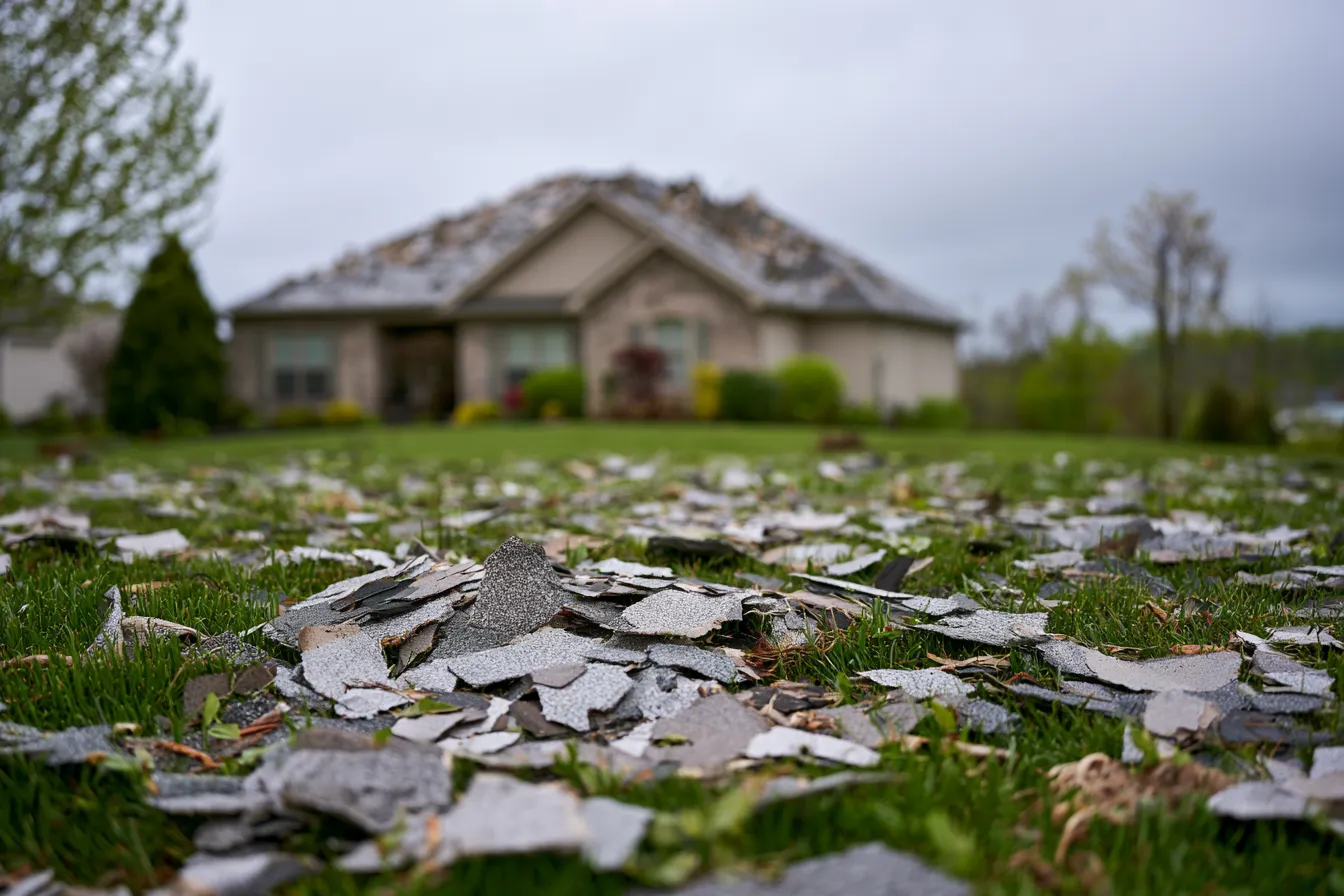
A marked test square on every face
Hits are counted in a measured area per slope, so the assessment comes back as a number you can check.
Soft metals read first
Gutters, vents and flashing bruise before shingles do, which is often what tells you a storm reached the house.
Granule loss and mat damage separated
Weathering and impact look alike from the ground and are not the same finding.
Findings dated to the event
What is found is tied to the storm date the county record supports, which is what a claim turns on.
A written result either way
If the roof came through it, that goes in writing too, and nothing is filed on your behalf.
What hail leaves on an Alma roof
Hail damage is quieter than wind damage and it shows up in places most people never check. Soft metal takes a mark at stone sizes that leave shingles looking untouched, which is why the gutters usually answer the question before the roof does.
Dents in soft metal around the house
Gutters, downspouts, vents and the fins of an air conditioner take marks at smaller stone sizes than shingles do. They are the cheapest evidence that a storm reached your address at all.
Grit banked up at the downspout outlets
A heavy wash of granules after a storm is material that used to be protecting the mat underneath. It rarely means a leak today.
Split or bruised areas on a walked slope
A strike can fracture the mat under the surface without opening it. The slope stays watertight for a while and then stops being so, usually seasons later.
Damage on some elevations and not others
Uneven damage across faces is the normal pattern, not a reason to doubt the finding. Each slope is rated separately for exactly this reason.
Marks on a fence, a deck or a shed roof
Anything else on the property that took the same storm helps establish what fell, and those surfaces are easier to photograph than a roof.
A roof that was already near the end
An older covering takes hail worse and is judged the same way as a new one. Age does not disqualify a claim, though it changes what a policy pays.
From first look to repair on a hail claim
The claim is yours throughout, and it moves in an order that puts documentation ahead of decisions. Take your time with the write-up once it is in your hands.
Ground evidence first
Soft metal, gutters, the ground under the eaves. What fell is often easier to establish from the yard than from the roof.
In a marked square on each face
Each face is checked in a measured area and the counts are recorded, along with the date of loss the storm record supports.
A dated record you can hand over
Photographs and a written record of what was found, dated to the storm. That is what an adjuster receives; what they conclude is theirs to decide.
You open the claim, then the work follows
The policy is yours and so is the claim. A roofer can be on the roof when the adjuster comes.
Hail questions Crawford County homeowners ask
Get your Alma hail damage looked at
Roughly when did it come through, and what have you seen since? Each slope gets assessed on its own and the findings go in writing.