
Gutters in Alma, AR
Gutter installation decides where a roof’s water lands, which makes it a foundation question as much as a roof one.
A roof sheds a surprising volume in one storm, and it all lands in the same few feet of ground.
What gutter work covers on an Alma home
Gutter work is sizing, fall and outlets before it is anything to do with the material.
A run that is too small overshoots in heavy rain no matter what it is made of. A run with too little fall holds water and sags. Too few downspouts and the whole length backs up at the first outlet.
Fall is the part that gets skipped because it is invisible from the ground. A gutter needs a consistent slope toward its outlet, and a long run usually needs a high point in the middle falling both ways rather than one continuous drop that would leave one end absurdly low.
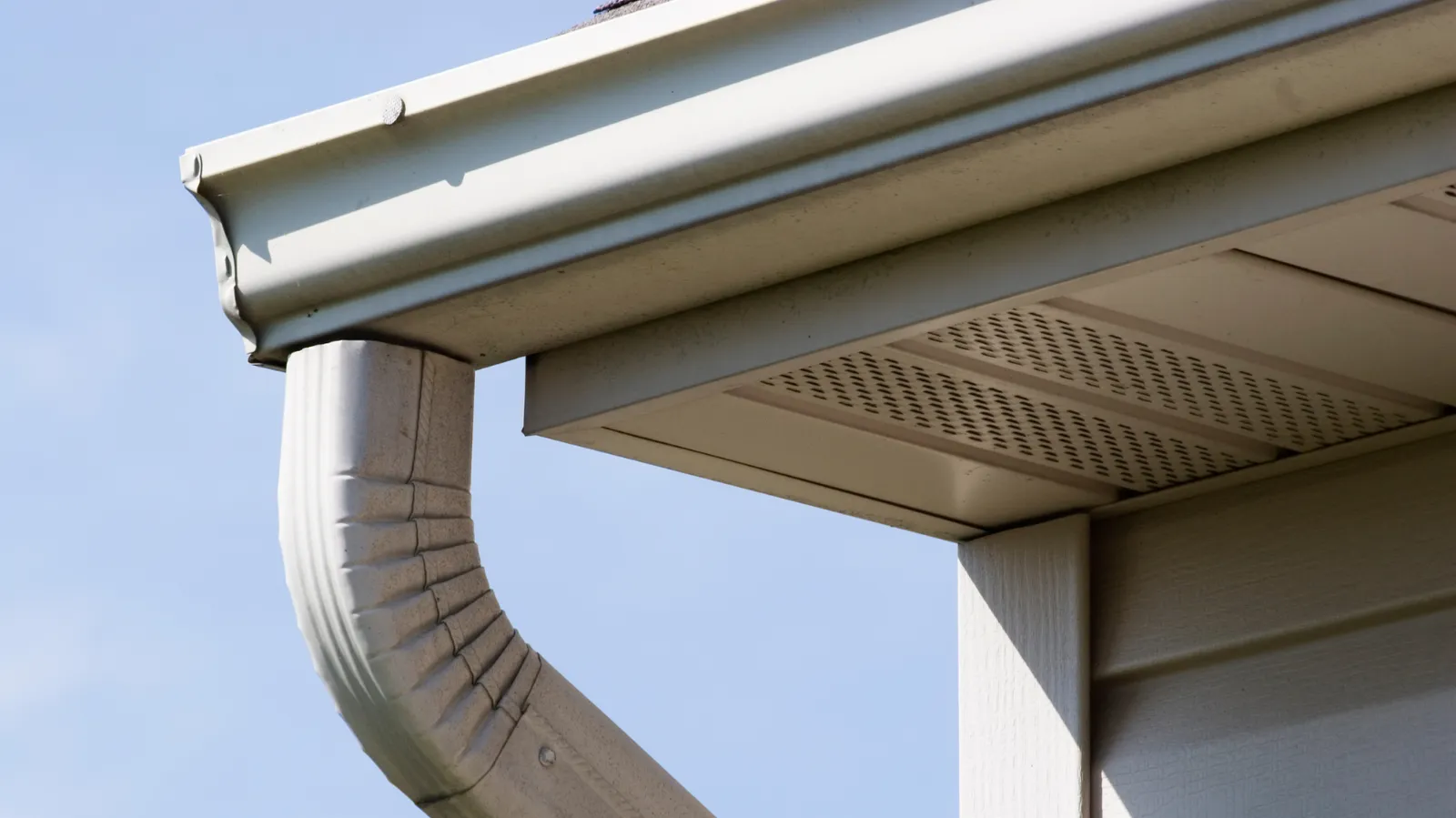
Fall and outlet count checked
A run that does not fall correctly holds water no matter how new it is, and one outlet short shows in the first heavy rain.
Fascia and soffit condition read first
Gutters hang off timber. If that timber is soft, new gutters are hung on a problem.
Sizing matched to the roof above
A large roof plane sheds more water than a standard run can carry, and that makes sizing a calculation. Preference does not come into it.
Discharge taken away from the house
Where the water lands matters as much as the gutter. Splash blocks and extensions are part of the job.
Sealing at joints and corners
Corners and outlets are where a run starts dripping, and they get sealed instead of left to the fixings.
What failing gutters do to a house
Gutter failures announce themselves on the ground long before anyone looks up. What follows are the cases where the damage is happening somewhere other than the gutter.
A trench in the bed under the eave
Water landing in the same line every storm digs a channel and then goes under the footing. The gutter above it has either failed or was never sized for the roof.
Damp showing inside at floor level
Water pooling at the wall finds its way in low. This is the expensive version of a cheap gutter problem.
Overflow at the same corner every time
A single overflowing point usually means a blockage or an outlet that cannot take what the run is delivering, not that the whole system is undersized.
Gutters pulling away from the fascia
Standing water is heavy. A sagging run is usually carrying water it should have shed, and the fixings are losing the argument.
Grit and shingle debris filling the run
A steady load of granules is the roof telling you about itself through the gutters, which are often where a covering’s age shows first.
Ice building at the eave in winter
Water backing up and freezing at the edge forces itself under the covering. It is a ventilation and drainage problem together, and it is worth solving before spring.
How gutters get sized and hung
The measuring is the job and the hanging is the easy part. What follows is the order that keeps a run from failing the first time it is properly tested.
Roof area to each run
How much roof drains to which length decides the size of the gutter and the number of outlets, before any material is chosen.
The fall and the high points
Slope toward each outlet is marked out first, with a high point in the middle of long runs so neither end finishes too low.
Fixings into solid timber
Brackets go into sound fascia at a spacing sized for the weight of water, which is what a full run carries.
Downspouts, then tested with water
Downspouts sized to the run, with the discharge taken far enough from the wall that it is not back inside the problem.
Gutter questions Alma homeowners ask most
Have the drainage looked at properly
Point at where the water is going wrong and roughly when it started. A local roofer looks at the fall, the outlets and where the discharge ends up.