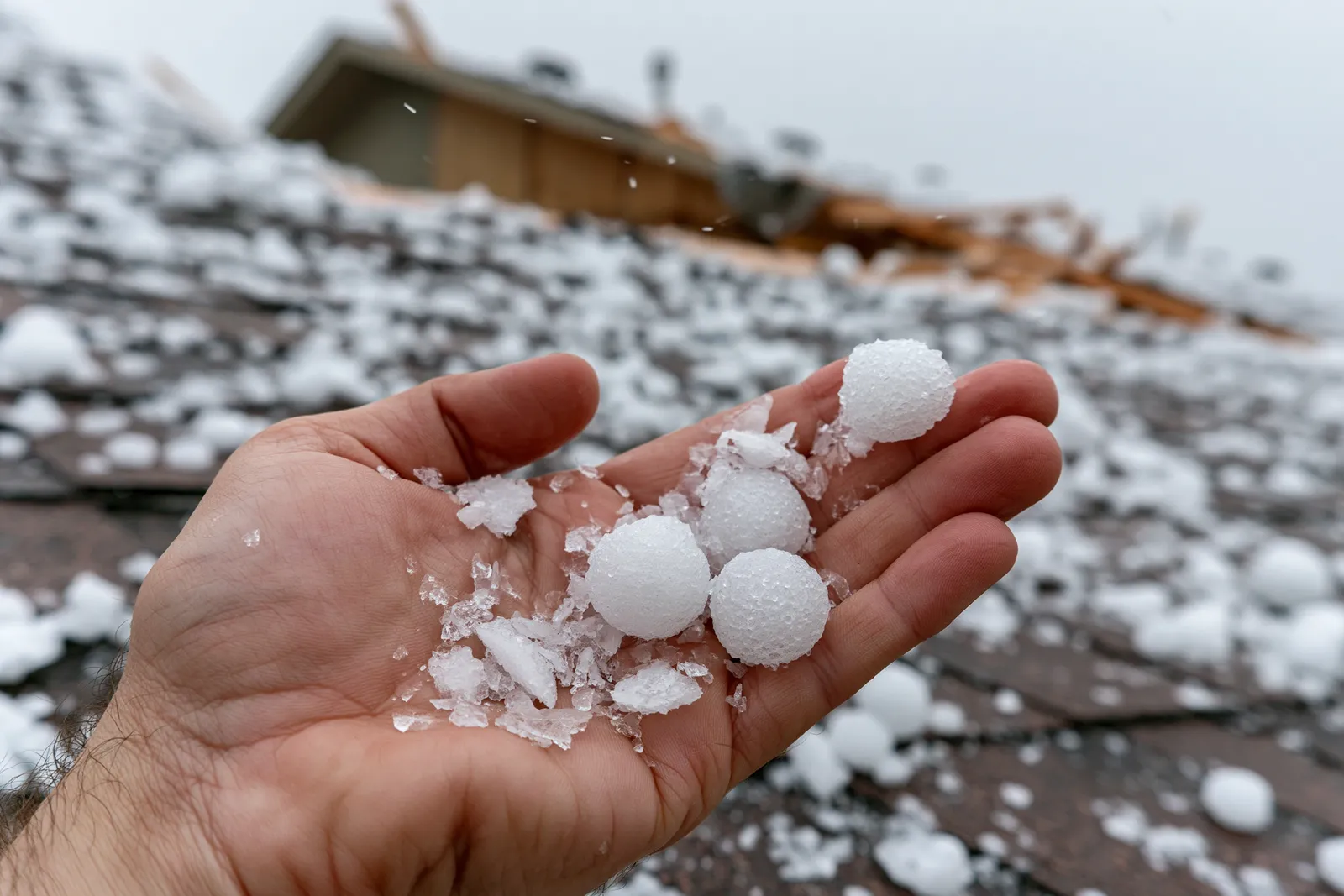
Crawford County takes hail regularly enough that most people here have stood at a window watching it. What far fewer have done is anything about it in the twenty-four hours afterwards, which is when the useful evidence is still lying around. None of what follows needs a ladder, and none of it commits you to filing anything.
What actually disappears first
Hailstones melt, and with them goes the simplest proof of what size fell at your address. Wet marks dry. Debris gets tidied. The roof itself changes least of all, which is exactly why the roof is the worst place to start.
What survives is what the stones hit on the way past: gutters, downspouts, vents, the fins on an air conditioner, a metal shed, a fence rail. Soft metal takes a visible mark at stone sizes that leave shingles looking untouched, and that mark is still there next week.
The ground-level check, in order
Twenty minutes with a phone, from the ground, the same day if you can.
- Photograph a stone beside something for scale before it melts. A coin works.
- Walk the outside of the house and photograph any dent in gutters, downspouts, vents or the air conditioner.
- Look at painted metal and fencing. Marks there establish what fell without anyone climbing.
- Check for grit washed out at the bottom of downspouts, which is the roof shedding its surface.
- Note the date and roughly the time. That single detail is what ties everything else to a storm.
Why the date carries so much weight
A roof claim is decided on whether damage traces to a covered event, and an event has a date. Damage without one is where claims get argued, because wear and hail look similar enough after a year that nobody can separate them confidently.
The county storm record establishes what fell in the area and when. Your photographs establish that it reached your address. Together those two are a far stronger position than either on its own, and both are free.
What not to do
Do not get on the roof. A wet roof after a storm is genuinely dangerous and there is nothing up there you need on day one.
Do not sign anything with someone who arrives unprompted. Storm-chasing outfits move through counties like this one after every event, and the pressure to sign on the spot is the tell.
Do not tidy up before photographing. The debris is the evidence, and it is worth an hour of untidiness.
What to do with what you found
Send the details to Alma Roofing Co and a local roofer walks the roof and the attic, then puts what was found in writing, dated to the storm. Whether you file anything afterwards stays entirely your call, and the insurance claims page sets out how that part works.